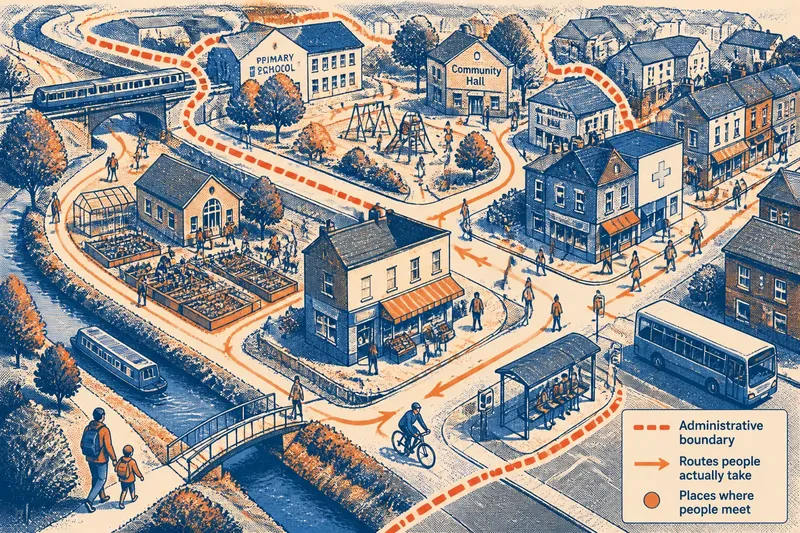
Before the Noticeboard: How Communities Shared Public Information
Learn how printed notices, public meetings and shared records each carried local information, and how to read their traces in your community today.
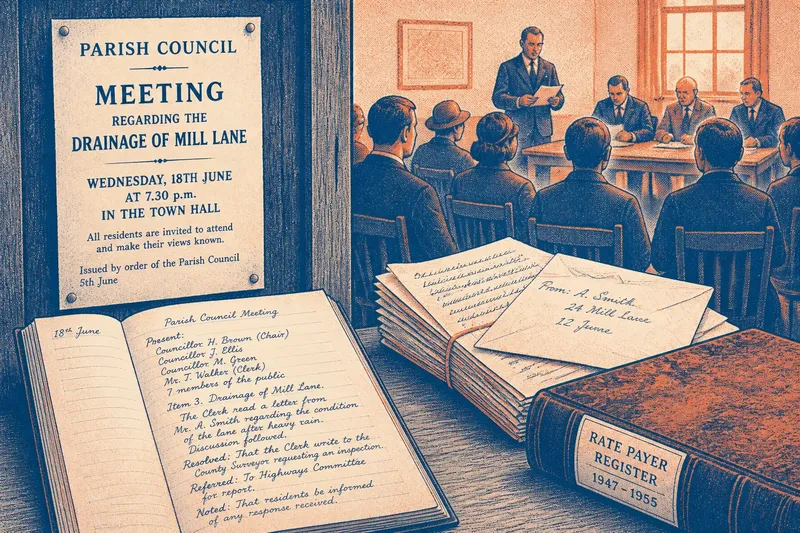
Printed notices, public meetings and shared records did different jobs in local life; none was a complete substitute for the others. To understand how a community once circulated public information, start with the place and the people involved, then ask what each channel could make visible. This approach also helps you interpret a surviving noticeboard, archive folder or meeting minute without treating it as a full picture of neighbourhood opinion.
Where would people encounter a notice?
Begin with the likely point of contact: a parish or town hall, post office, library, place of worship, shop window or workplace entrance. A notice was useful only if people passed it, could read it and had reason to trust its source. Its location therefore tells you something about who the intended audience might have been.
Look at the physical form as well as the wording. A sheet pinned beside a doorway could announce a meeting, a road closure, a lost item or a public appointment; a handbill might travel from person to person. Notice the named issuer, date, audience, requested action and any contact details. A missing date or vague source makes it harder to know whether the information was current or authoritative.
Say you find an invented, hypothetical notice in a library collection announcing a meeting about a lane’s drainage. If it names the issuing local body, gives a venue and asks residents to attend, you can reasonably identify its purpose and intended readers; you cannot infer that every household saw it or agreed with it.
What could a public meeting add?
A printed notice could tell residents that something was happening, but a meeting allowed people to hear explanations, raise questions and respond in the presence of others. It could also make disagreement audible, though the people in the room were not necessarily representative of everyone affected. Attendance depended on practical matters such as timing, distance, work and confidence in speaking publicly.
When examining a meeting record, distinguish the announcement from the event itself. A notice might show that a gathering was called; minutes could record who chaired it, what business was discussed and what decisions or actions were entered. Neither document alone reveals every exchange, informal conversation or person who stayed away.
Meeting records often use compressed language. Terms such as “resolved”, “referred” or “noted” signal different treatments of a subject: a resolution records a formal decision, a referral passes an issue elsewhere, and a note may simply preserve information. Read the surrounding entry rather than assuming that every mention marks a decision.
Why keep shared records?
Records gave public information a longer life than a notice pinned to a wall. Minutes, registers, correspondence and accounts could preserve what an organisation received, discussed or did, allowing later readers to follow a matter across more than one gathering. They also created an administrative memory: a later clerk or committee could consult earlier entries instead of relying only on recollection.
Each kind of record has its own limits. Minutes are usually selective rather than word-for-word transcripts; a register may track a particular service or obligation without describing residents’ wider experiences; correspondence captures the voices of people who chose or were able to write. The record’s purpose shapes what it includes and what it leaves out.
Notice how records connect. A notice may identify a meeting date, minutes may refer to a letter or proposal, and a later entry may record an action. Together, these traces can show how information moved from announcement to discussion and administration. A gap in the sequence does not, by itself, explain why the gap exists.
How do these channels fit together?
Think of printed notices as prompts, meetings as occasions for exchange and shared records as a durable account of selected business. Their roles overlapped, but their reach and detail differed. A notice could circulate widely without recording responses; a meeting could allow discussion while excluding people who could not attend; a record could preserve a decision while omitting the route by which residents first heard of it.
To trace a local issue, follow the evidence in that order where possible: identify the notice or announcement, find the meeting it refers to, then look for minutes or associated correspondence. Compare dates, names and wording. If the documents disagree or leave a gap, mark that uncertainty rather than filling it with an assumption.
What questions help you read the evidence?
Who was the notice meant to reach?
Check its location, language, issuer and stated audience. These clues can suggest intended readers, but they cannot establish who actually saw it.
What does a meeting record leave out?
Look for its stated purpose and the type of record it is. Minutes usually select formal business, so they may not preserve every comment, informal exchange or absent resident’s view.
How can I tell whether information led to action?
Search later entries for a recorded resolution, referral or follow-up, and compare them with relevant correspondence. A discussion or announcement alone is not evidence that a proposed action was completed.
Where can I look for surviving local records?
Ask a local library, council or parish office, community archive, museum or county record office about catalogues and access arrangements. Collections vary, and some material may be held under an organisation’s name rather than a neighbourhood or street.
What can a present-day reader take from the trail?
Read each source for the job it was designed to do. A notice can establish that information was issued; a meeting record can show how formal discussion was recorded; a shared register or file can reveal what an organisation chose to retain. Comparing them gives a more careful account than relying on one surviving sheet.
When you next encounter a local noticeboard or archive file, note who issued the information, where it travelled and what record, if any, followed it. That simple sequence makes the history of local public information easier to see—and helps keep the difference clear between what a document says and what a community as a whole knew or thought.